

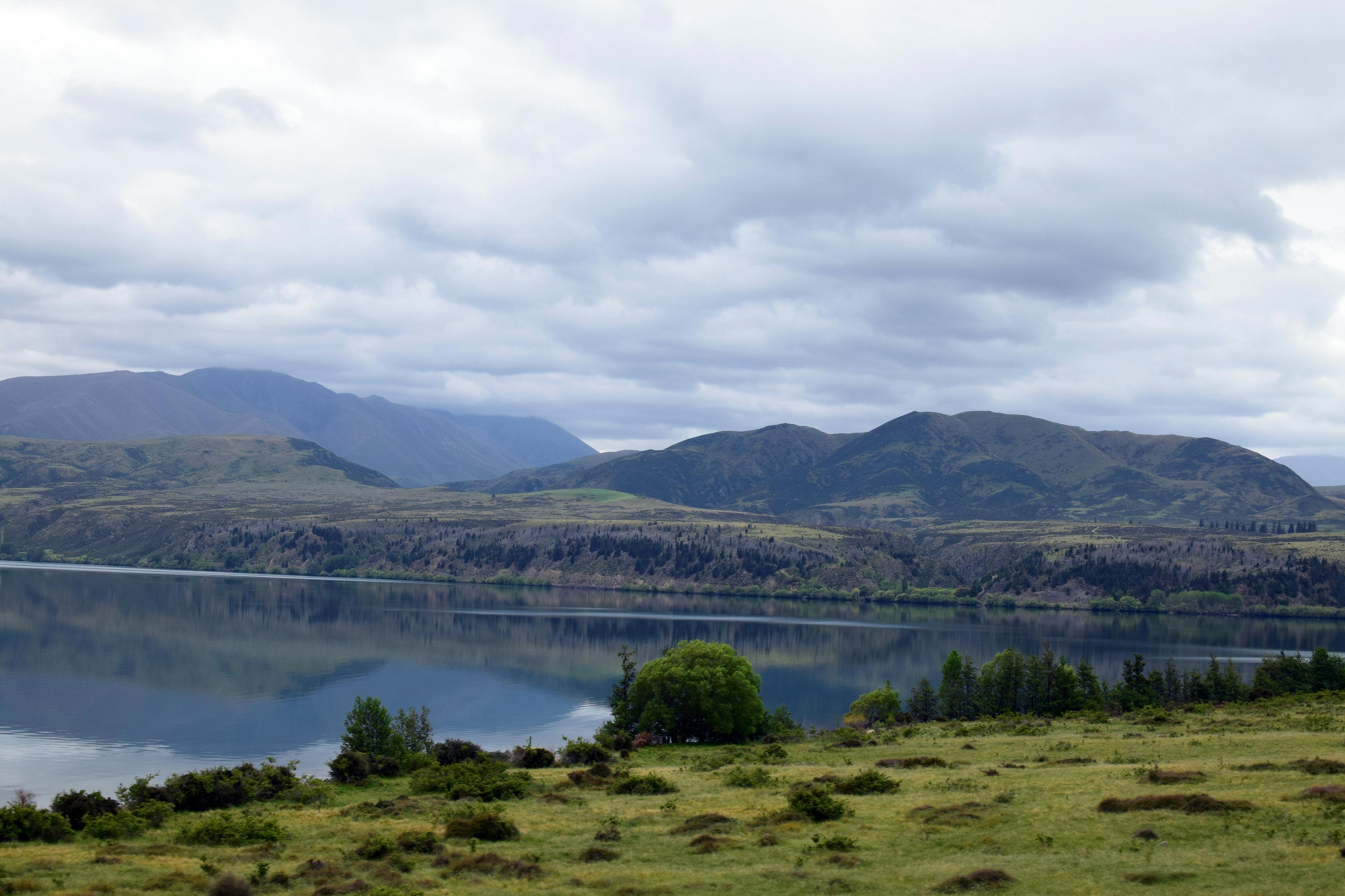
Somewhere in the remote interior of New Zealand's North Island, a beekeeper is making their way up a hillside - inaccessible by road, reachable only by helicopter. Below them, a valley stretches in silence, blanketed in native bush. And among it, unmistakable: the pale-flowered canopy of the Leptospermum scoparium - the Mānuka tree, in bloom.
This moment lasts just a few fleeting weeks each year. The window is brief, the yield is finite and the honey it produces is unlike anything else on earth. This is not a coincidence of geography - it’s the result of conditions so precise, so rare and so irreplaceable that no other country has been able to replicate them.
The question is worth asking with sincerity: why New Zealand? The answer reaches deep into the soil, the sky, the indigenous knowledge of the Māori and the science of a grading system that exists for this honey.
A Tree Unlike Any Other
The story of Mānuka honey begins not with a hive, but with a tree. The Leptospermum scoparium - known universally by its Māori name, Mānuka - is native to New Zealand. It grows across the country's North and South Islands with the resilience of a plant evolved for challenging terrain: steep hillsides, volcanic soil, high-altitude ridgelines, and coastal scrubland where little else will take hold.
The Māori have understood this tree for centuries. Its bark, branches and leaves were fashioned into tools, medicines and building materials - a plant so woven into the fabric of indigenous life that its name carries a weight beyond botany. When early European settlers arrived in the 1800s and introduced the honey bee to New Zealand's extraordinary botanical flora, the bees found their way to the Mānuka flower with an instinct that, in hindsight, seems inevitable.
What the bees harvested from those pale blooms was extraordinary. The Leptospermum scoparium produces nectar with a unique chemical profile - most notably dihydroxyacetone (DHA), a compound that converts to methylglyoxal (MGO) in the cured honey. It is MGO that gives Mānuka honey its remarkable properties, and it is a compound found at meaningful concentrations in no other honey on earth.
New Zealand’s Geography - Unmatched Conditions
Leptospermum species grow in parts of Australia. This is a question worth addressing directly, because it’s the first objection a discerning buyer may raise. The answer lies not in the species itself, but in the conditions under which it grows in New Zealand - and those conditions are, in every meaningful sense, irreplaceable.
New Zealand's geographic isolation, some 1,600 kilometres from the nearest continent, has produced an environment of extraordinary purity. The prevailing westerly winds carry air across thousands of kilometres of open ocean before reaching New Zealand's coastline, arriving almost entirely free of industrial pollutants. The soil is predominantly volcanic and mineral-rich, untouched by the agricultural pressures that characterise more densely populated landmasses. And the country's temperate climate - characterised by high seasonal rainfall, distinct temperature variation and intense ultraviolet light - creates precisely the stress conditions under which the Mānuka tree produces its most potent nectar.
It’s terroir, in the truest sense of the word, the same principle that explains why a Burgundian vineyard cannot be replicated in Napa, or why Darjeeling tea grown anywhere else loses something essential.
The character of the product is inseparable from the character of the land.
New Zealand's North Island is the heartland of Mānuka production. Its volcanic plateau, rugged ranges and deeply incised valleys create a patchwork of microclimates in which the Mānuka tree flourishes in its most productive form. The Hawke's Bay, the Waikato and the remote reaches of the East Cape are among the most prized growing regions - areas where the density and purity of Mānuka-dominant flora allows bees to produce monofloral honey with the consistency that premium certification demands.
Our hives at Primal by Nature are placed precisely in these environments - remote hilltops and rural valleys where Mānuka is not simply present, but dominant. The inaccessibility is not a logistical inconvenience; it is a quality guarantee.
The South Island, meanwhile, offers a different expression of the same story. Wilder, more remote and significantly less populated, its landscapes carry a rawness that is felt as much as observed. The Mānuka here grows at higher elevations and in harsher conditions - and it is this environmental pressure that drives the plant to produce nectar of exceptional potency.
Across both islands, the conclusion is the same: New Zealand does not merely produce Mānuka honey - it is the only place on earth where genuine, high-grade monofloral Mānuka honey can be produced with the consistency, purity, and potency that the world's most discerning buyers expect.
The Short, Sacred Window That Defines The Scarcity
The Mānuka tree blooms for approximately two to six weeks each year - a window so brief that it demands total readiness from beekeeper and bee alike. There is no margin for delay. When the flowers open, the harvest begins. When they close, it is over until the following season.
This brevity is not a limitation - it’s a defining feature. The concentration of DHA in the nectar is at its peak during this short bloom. Bees working at maximum intensity in a Mānuka-dominant environment during these precise weeks produce honey of a purity and potency that a longer, more diluted season simply cannot match.
Scarcity and quality are not in tension here - they are the same thing. A jar of genuine, high-grade Mānuka honey represents the cumulative effort of a precise season, a pristine landscape, and a plant that blooms on its own terms.
The price reflects this. So does the quality.
Where UMF and Geography Come Together
The Unique Mānuka Factor - UMF™ - is the gold standard grading system for Mānuka honey, administered by the UMF Honey Association of New Zealand. It measures four key compounds whose presence and ratio confirm both the honey's authenticity and its potency:
Methylglyoxal (MGO) - the primary active compound responsible for Mānuka honey's distinctive properties
Dihydroxyacetone (DHA) - the precursor to MGO found in Mānuka nectar, which indicates freshness and future potency
Leptosperin - a compound unique to Leptospermum scoparium, confirming the honey's botanical authenticity
Hydroxymethylfurfural (HMF) - an indicator of freshness and proper storage conditions
What is critical to understand is that these compounds are not the result of processing or production - they are a direct expression of the plant, the soil, the climate and the care of the beekeeper. Geography is not incidental to the UMF™ grade. Geography is the grade. A UMF 15+ Mānuka honey carries a minimum MGO content of 550mg/kg. A UMF 20+ carries a minimum of 829mg/kg.
These figures are the measurable signature of an environment that cannot be counterfeited. Explore our full range of UMF™ certified Mānuka honey - and discover the grade that's right for you.
Where Craft Meets Certification
Understanding why New Zealand produces the world's finest Mānuka honey is one thing. Knowing which producer delivers it at the highest standard is another.
Primal by Nature was built on a single conviction: that the extraordinary provenance of New Zealand Mānuka honey deserves a producer equal to its legacy. Every decision we make - from hive placement to packaging - reflects that conviction.
Our beekeepers adopt a deliberately non-invasive approach. There is no micromanagement of the bee's environment, no artificial interference with the colony's natural rhythms. The bees work the Mānuka flowers as they have always done and we steward that process with care rather than control.
Every batch of Primal by Nature honey is independently tested in IANZ-certified laboratories - not because regulation demands it, but because our standards do. We test for MGO, DHA, leptosperin and HMF, as well as over 500 additional compounds to ensure our honey is 100% free from pesticides, antibiotics and C4 sugars. Each jar is packed from a single source, ensuring complete traceability from hive to shelf.
That commitment has been recognised internationally. Primal by Nature has secured Platinum and Gold awards at the London International Honey Awards, alongside recognition at the 2025 Global Honey Stars. These are not marketing claims. They are the independent validation of a standard we hold ourselves to unconditionally.
How to Know You're Buying the Real Thing
In a global market where Mānuka honey commands a significant premium, the incentive for imitation is real. Studies have consistently shown that the volume of Mānuka honey sold internationally exceeds what New Zealand could plausibly produce - a clear indication that not everything labelled as Mānuka is genuine.
When evaluating a Mānuka honey, there are four non-negotiable markers to look for:
- The UMF™ trademark - issued only to licensed members of the UMF Honey Association of New Zealand. Without it, the grade cannot be verified
- MPI-compliant labelling - confirming the honey meets New Zealand's Ministry for Primary Industries scientific definition of monofloral Mānuka honey
- Independent lab certification - third-party testing, not self-reported data. IANZ accreditation is the benchmark
- Single-source packing - honey blended from multiple apiaries cannot guarantee the consistency or purity of a single-origin product
Every jar of Primal by Nature meets all four criteria. For buyers who wish to go deeper before purchasing, our Buying Guide provides a comprehensive overview of UMF™ grades and how to select the right honey for your needs.
There is a reason the world's most demanding buyers - from the wellness communities of Tokyo and Singapore to the premium retailers of London and Dubai - return to New Zealand Mānuka honey, and to Primal by Nature specifically. That reason is not marketing. It is geography, heritage, science and an unwillingness to compromise. Every jar carries the irreplaceable essence of New Zealand's most remote and pristine environments - nothing added, nothing taken away.
The landscape did its work. We simply ensured the rest was worthy of it. Experience the pure and untamed essence of New Zealand. Shop Primal by Nature.


